Mobility Connect 2026: Autonomous Futures of the Last Mile
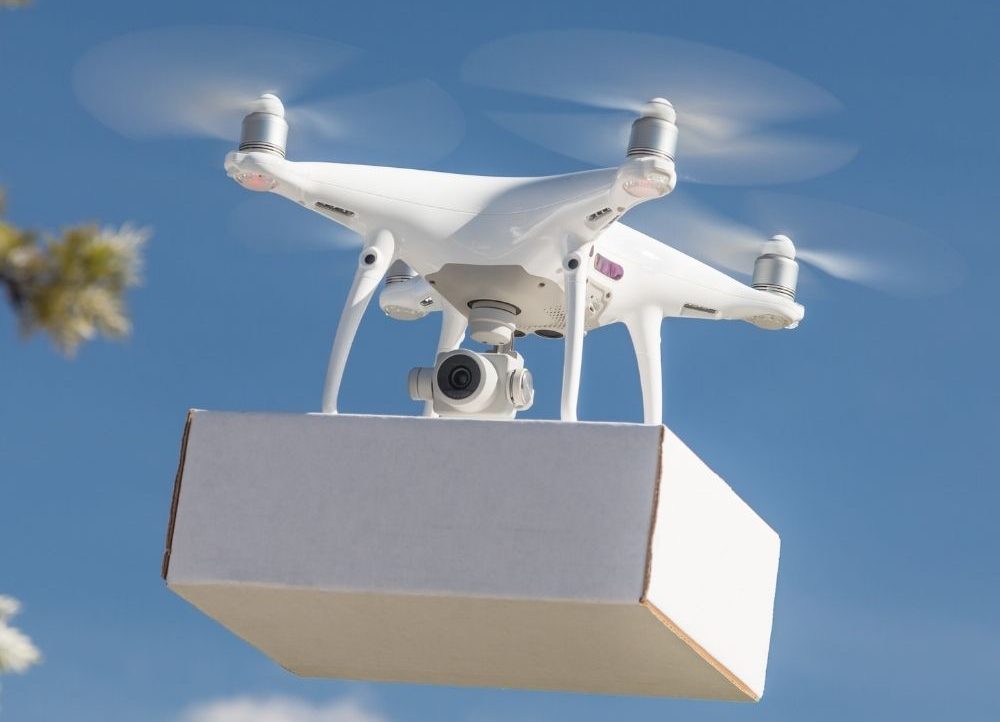
Automation is moving closer to where people live, work, and shop. It began with pilot projects on highways and in city centers; now it is reaching the last mile, the final stretch that brings people and goods to their destination. Who benefits when machines take over this stretch? And what does it mean for cities and the environment?
The event is guided by one question: How will automation reshape the last mile of moving people and goods, and what kind of futures will emerge as a result? The discussion approaches it from three angles:
- Technology, Sustainability, and Urban Transformation
What do cities need to change in their streets and planning to make room for automated delivery and shuttles? And what does that mean for the environment? - Work, Responsibility, and Society
Algorithms increasingly run the last stretch of a journey. Who gains oversight, and who loses it? - Communication, Trust, and Public Perception
How do media and public debate portray delivery robots and autonomous shuttles? And how does that shape what people trust?
When / Wann: November 18, 2026, 16:30 - 19:30
Where / Wo: Digital Society Initiative, Rämistrasse 69, 8001 Zurich
Language / Sprache: English
Registration / Anmeldung: Link
Organisation: DSI Community Mobility
Panel speakers
- Sebastian Köhler, Logistics & Operations Management, KIT
PhD student in the project Country to City Bridge, which studies how autonomous, electric ride-pooling shuttles can connect rural areas to public transit hubs and reduce dependence on private cars. - Gemma Newlands, Digital Sociology, UZH
Assistant Professor of Sociology of Societal Digitalization. Her research examines how work is changing in the age of artificial intelligence, particularly human–AI hybridity in the workplace, including algorithmic bias, digital labor platforms, and workplace surveillance. - Josephine Roper, Urban Analytics / Geography, UZH
Postdoctoral researcher at the Urban Analytics Lab. She studies access to opportunity and how urban transport systems serve everyday needs, and develops accessibility indices (e.g., THERE, perceived walkability) that help cities densify sustainably while remaining livable. - John Anderson Garcia Henao, AI/ML for Musculoskeletal Health, Balgrist University Hospital
Senior AI/ML Scientist developing trustworthy digital twins of the musculoskeletal system for personalized surgical planning and rehabilitation, linking high-performance sport, everyday mobility, and clinical recovery. - Stefan Lakämper, Traffic Medicine, Institute of Forensic Medicine (IRM), UZH
Head of Research and Research Development in the Division of Traffic Medicine. A biochemist by training (Dr. rer. nat.), he works on fitness to drive and substance-induced driving impairment in the context of increasingly digital and automated mobility. - Saverio Bolognani, Automatic Control Laboratory, ETH Zurich
Senior Scientist applying networked control theory to complex systems such as autonomous mobility, with a focus on efficiency and fairness. His work spans feedback control design, distributed and stochastic optimization, game theory, and social choice theory.
Agenda
| Welcome and opening remarks (10 min) |
| Lightning talks by invited speakers (approx. 5 min each) |
| Table discussions with the panelists (30 min) |
| Panel reflection and Q&A (20 min) |
| Drinks and Mobility Pub Quiz |